
Concrete remains an essential material in modern construction, underpinning everything from homes to commercial buildings and highways. Yet the environmental impact of this material is coming under increased scrutiny as society seeks ways to limit carbon emissions and conserve natural resources. Today, integrating sustainable approaches has become a focus for many in the industry, including a local concrete company seeking reliable, eco-friendly options for new builds and renovations. Sustainable concrete offers a viable path to reducing environmental footprints while delivering strong, durable, and cost-effective results.
By transforming how concrete is produced and used, sustainable solutions not only help protect the environment but also improve long-term performance outcomes in construction projects. Innovative advancements such as recycled aggregates, supplementary cementitious materials, and low-carbon cements are quickly becoming industry standards, paving the way for greener and more resilient infrastructure.
The shift toward sustainable concrete is not only about compliance or corporate responsibility. It also brings about tangible business advantages and societal benefits. Builders, architects, and project owners now recognize that these innovative materials can be instrumental in meeting environmental targets while maintaining the structure and integrity of every build.
In light of these industry changes, learning more about how concrete can be both sustainable and high-performing is crucial for professionals and property owners alike.
Environmental Impact Of Traditional Concrete
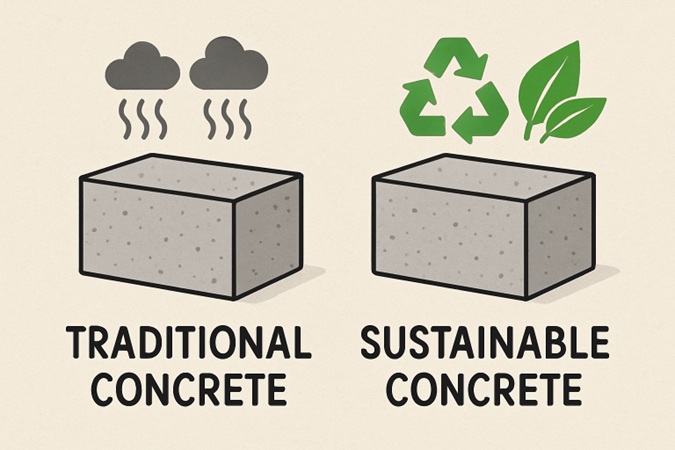
Traditional concrete production is a significant contributor to global carbon dioxide emissions, accounting for about 8% of total emissions. The environmental concerns stem mostly from the intensive energy required to produce Portland cement. This binding agent depends on heating limestone and clay to high temperatures, a process that not only consumes vast amounts of energy but also releases substantial carbon dioxide as a chemical byproduct. Furthermore, the extraction of virgin materials for concrete production disrupts habitats and depletes resources, raising additional environmental issues that the construction sector must address.
Advantages Of Sustainable Concrete
Sustainable concrete options offer a practical solution to the issues associated with traditional materials. First, they enable a sharp reduction in carbon emissions by utilizing alternatives such as industrial by-products, recycled aggregates, and supplementary cementitious materials. Some of these alternatives, such as fly ash and slag, help reduce concrete’s embodied carbon while still meeting or exceeding the performance criteria for standard construction.
- Reduced Carbon Emissions: The adoption of alternative binders and processes has led to a new generation of concrete mixes that emit significantly less carbon dioxide. For example, replacing a portion of Portland cement with fly ash or slag yields a product with a considerably lower carbon footprint while still providing the strength and workability required for construction.
- Enhanced Durability: Sustainable concrete solutions often boast increased resistance to chemicals, freeze-thaw cycles, and other environmental factors. This longevity translates to fewer repairs and replacements, ultimately saving resources and money over the structure’s lifetime.
- Resource Conservation: By recycling construction debris and using industrial by-products, sustainable concrete helps conserve aggregates and minimize landfill waste. This approach is beneficial not only environmentally but also economically.
Innovative Materials In Sustainable Concrete
The push for sustainability has inspired the use of forward-thinking materials in concrete production. Among the most promising are:
- Recycled Aggregates: Crushed concrete, glass, and even old bricks are now used to replace traditional gravel in new concrete mixes, limiting the need for virgin materials and reducing overall waste. Studies by organizations such as the World Green Building Council confirm this practice can lead to a substantial cut in environmental impact.
- Geopolymer Cement: This innovative approach replaces conventional Portland cement with synthetic aluminosilicate materials sourced from industrial by-products. Geopolymer concrete offers greatly reduced carbon emissions, sometimes up to 80% lower, making it a promising alternative for large-scale projects.
- Porous Concrete: Also known as permeable concrete, this technology is designed to allow water to move through the mix, improving natural drainage and reducing stormwater runoff. Porous pavement has become a key part of sustainable urban design strategies worldwide.
Case Studies Of Sustainable Concrete Implementation
Several projects have highlighted the positive impact and feasibility of sustainable concrete in real-world applications:
- Low-Carbon Cement Technology: Fortera, a California-based startup, has introduced technology that captures carbon dioxide emissions from cement production and recycles them to create a new binding agent. Their product, ReAct, has shown potential to reduce industry emissions by up to 70%, marking a significant step toward greener construction.
- Carbon-Negative Concrete Materials: Companies like Paebbl are working to capture atmospheric carbon dioxide and combine it with minerals to produce construction-grade powders. This innovative process not only reduces emissions but can even make concrete production carbon-negative in certain applications.
These advancements not only demonstrate that sustainable practices are achievable but also provide models for other companies and municipalities to follow as the industry moves toward greener building standards. More information about global efforts to reduce emissions through innovative building materials is available from sources such as Time Magazine.
Economic Benefits Of Sustainable Concrete
Sustainable solutions deliver more than just environmental returns; they offer significant economic advantages as well:
- Operational Savings: Energy-efficient construction using low-carbon concrete has demonstrated reduced energy bills and maintenance costs. In some notable commercial projects, building owners have reported operational savings of up to 20% in the first year after switching to these innovative materials, with even greater reductions over the longer term.
- Increased Market Value: As green certifications such as LEED, BREEAM, and WELL become more prevalent, sustainably built structures are fetching higher sale and rental prices. The growing demand for certified buildings underscores the value of early adoption for forward-thinking developers.
- Regulatory Incentives: Many regions offer incentives for using sustainable materials, including tax credits, accelerated permit approvals, and eligibility for public funding on certain projects.
Future Trends In Sustainable Concrete
Research and development in concrete technology continue to introduce promising trends:
- Self-Healing Concrete: Innovations involving bacteria or chemical agents enable concrete to repair cracks autonomously, extending the service life and reducing long-term maintenance costs.
- Carbon Capture in Construction: Emerging practices involve embedding captured CO₂ into concrete, essentially turning structures into long-term carbon storage facilities, which could significantly impact urban carbon management.
- Advanced Predictive Modeling: Advanced data analytics enables engineers to optimize green concrete mixes before a project even begins, ensuring the right balance of performance and sustainability.
Conclusion
Sustainable concrete solutions are becoming an integral part of modern construction, offering a path toward reduced emissions, resource conservation, and improved economic returns. By embracing these new materials and techniques, professionals can contribute to a more environmentally responsible and resilient built environment while retaining the practical benefits that have made concrete an industry mainstay.